Desert Ecosystem
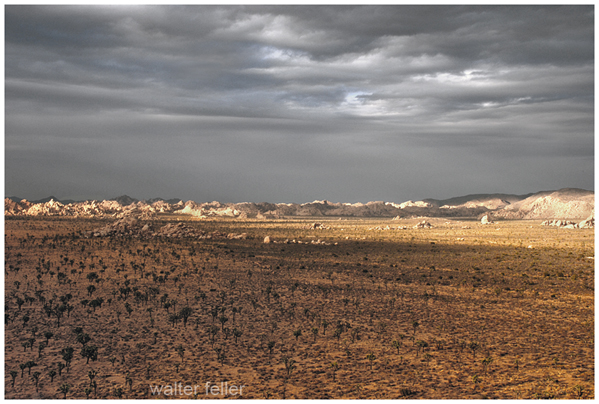
Deserts host plants and animals living in what many people view as harsh and unforgiving environments. Solar energy that green plants convert into food fuels everything here. In most ecosystems plants compete for sunlight, but in the desert many plants are adapted to lessen the effects of too much sun.
Annuals compress their life cycles and go dormant as conditions grow unfavorable. Sudden carpets of wildflowers mark their waking from dormancy as seeds, like time travelers, quickly germinate, flower, and renew their species before seasonal moisture dries up again.
Patient perennials follow another path. Joshua trees flourish in brief moist periods, then wait out long dry spells.
Many animals get their energy by eating plants, yet desert plants give up their production reluctantly. Sharp spines and chemical laden leaves discourage plant eaters. The kangaroo rat avoids these defenses by eating seeds. These seeds can be small and hard to find, often looking like grains of sand. With sensitive front paws the kangaroo rat sifts sand by touch, finds the seeds, eats them, and turns plant energy into animal life. This same energy keeps moving through the ecosystem as kangaroo rats and other herbivores like jackrabbits fall prey to great horned owls, coyotes, bobcats, and snakes.
A large, productive plant like the Joshua tree becomes the center of a small community. Some birds nest in the living tree. Others feed on insects that live there. Fallen limbs or the tree's toppled body provide homes for the yucca night lizard and for termites. Even in death, the Joshua tree's stored solar energy is turned into animal tissue by termites. Yucca night lizards may eat the termites, but in turn become food for owls or snakes. As the dead tree continues to decompose, stinkbugs may nibble on their slowly collapsing home. And so the sun's energy continues its path through the working life of the desert.
Two major desert types meet within Joshua Tree National Park: the Mojave and the Colorado. Many ecologists describe the park as a transition zone between them. Traveling from Twentynine Palms toward the South Entrance, Joshua trees begin appearing at about the 3000 foot level. Their presence marks the Mojave Desert.
In the Pinto Basin, plants of the Colorado Desert take over: Bigelow (jumping) cholla and ocotillo. South of the Cottonwood Visitor Center grow even more distinctive Colorado Desert plants such as palo verde, chuparosa, and ironwood.
Nearly three quarters of the park has been designated by Congress for permanent protection as wilderness. Its highest value lies in these broad landscapes, the open arid landforms, deep vistas, and varied desert habitats that offer space, refuge, and recreation for southern California residents and for visitors from across the country and the world.
plants animals environments ecosystems wildflowers species perennials Joshua trees herbivores jackrabbits, prey carnivores great horned owls, coyotes, bobcats snakes. wildlife. birds
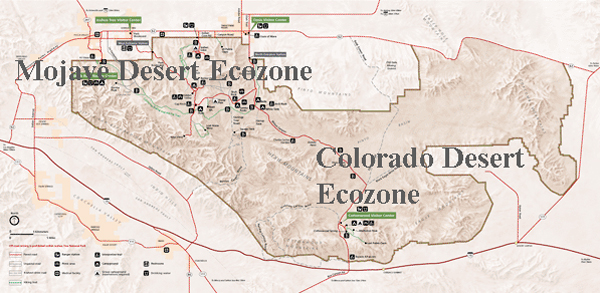
Mojave Desert Ecozone
A high (over 3,000 feet) desert with more annual rainfall than it's low desert counterpart, home to extensive stands of Joshua Tree.Colorado Desert Ecozone
Habitat to creosote, ocotillo and cholla, the lower, drier Colorado occupies the eastern portion of the park.Desert Food Chains
How it all works together, a sequence of plants, herbivores and carnivores, through which energy and materials move within an ecosystem. ...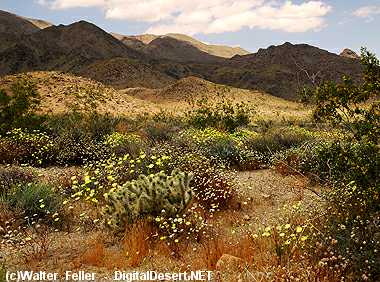
Wildflowers awaken from dormancy
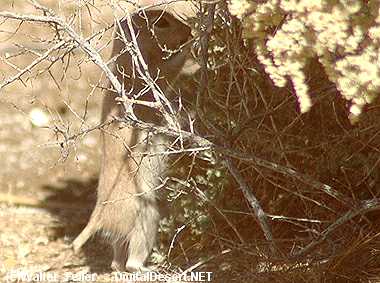
Round-tailed rat nibbles at cattle spinach
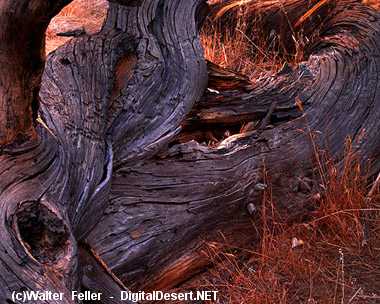 A dead log makes a fine home for some animals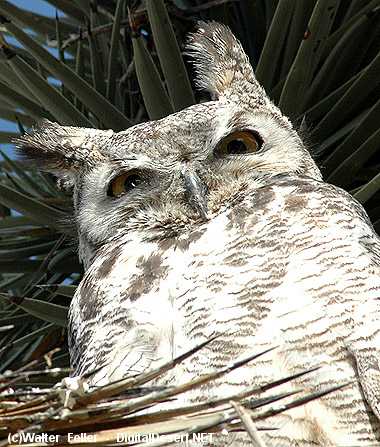
Great horned owl waits for evening
More information:
Mojave Desert Geomorphic Province
California Desert & Mountains Ecological Region
Mojave Desert Ecosection
Ecosystems & Habitats
Tree & shrub dominated environments