-.-
Grand Canyon Village
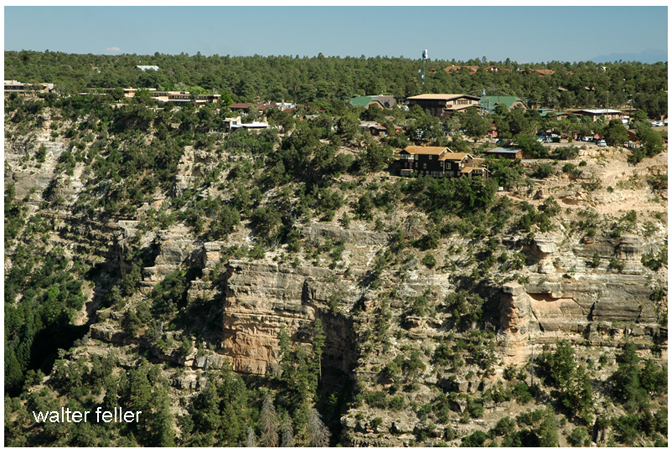
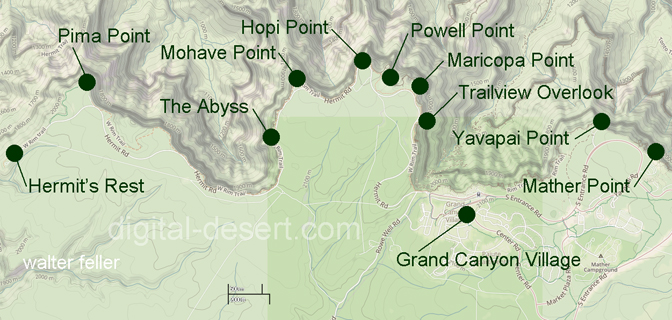
The history of Grand Canyon Village is closely tied to tourism, railroads, and the federal preservation movement that emerged in the American West at the turn of the twentieth century.
Long before the village existed, the South Rim was used and inhabited by Indigenous peoples including the Havasupai Tribe, Hopi Tribe, Navajo Nation, Paiute, and others. Trails, seasonal camps, trade routes, and sacred associations with the canyon long predated Euro-American settlement.
In the 1880s and 1890s, prospectors, ranchers, and entrepreneurs began arriving along the South Rim. Early tourism was primitive. Visitors usually reached the canyon by stagecoach from distant railheads across northern Arizona. Small tent camps and rough hotels appeared near today's village area.
A major turning point came in 1901 when the Atchison, Topeka and Santa Fe Railway completed a rail spur from Williams, Arizona directly to the South Rim. The arrival of the railroad transformed the canyon from a remote destination into a nationally accessible attraction. The railroad depot became the nucleus around which the modern village developed.
Railway executives sought to create an upscale destination that would attract affluent eastern travelers. In 1905 they opened El Tovar Hotel, designed by architect Charles Whittlesey. Built from local limestone and pine logs, the hotel blended rustic and European influences and became one of the great railroad hotels of the American West.
During the same period, architect and designer Mary Colter helped shape the village's visual identity. Her buildings, including Hopi House (1905), attempted to harmonize with the landscape while drawing inspiration from Indigenous Southwestern architecture and craftsmanship. Colter later designed additional canyon structures that became iconic elements of the park.
Federal protection followed rapidly. President Theodore Roosevelt visited the canyon repeatedly and strongly advocated preservation, famously urging visitors to "leave it as it is." In 1908 he established the area as Grand Canyon National Monument establishment. Congress later created Grand Canyon National Park in 1919.
The village expanded through the early twentieth century with campgrounds, employee housing, mule facilities, curio shops, and administrative buildings. When the National Park Service was established in 1916, Grand Canyon Village became an important example of early park planning. Designers attempted to cluster development in one area to preserve broader rim landscapes from uncontrolled commercial sprawl.
By the mid-twentieth century, automobile tourism overtook rail travel. Roads widened, parking areas expanded, and new visitor infrastructure appeared. Yet the historic core of the village survived unusually intact. In 1975 much of the area was designated the Grand Canyon Village Historic District, recognizing its importance in the history of American tourism, railroad development, rustic architecture, and the national park movement.
Today the village still retains much of its early twentieth-century character. Stone buildings, railway infrastructure, rim trails, and Mary Colter's architecture preserve the atmosphere of the classic railroad-era national park experience.